Evidence & Training · Exercise Guides
How to Bench Press: Setup, Grip Width and Muscles Worked
How to bench press step by step, what research shows about grip width, barbell vs dumbbell pressing and the muscles worked, and how to bench safely at home without a spotter.
The bench press is the standard test of upper-body strength and the main chest exercise in most programmes. Small details of the setup — where your shoulder blades are, how wide you grip, where the bar touches — change how strong and how comfortable the lift feels.
This guide covers the technique step by step, what studies show about grip width and barbell versus dumbbell pressing, and how to bench safely when you train alone at home. If you already bench and want a bigger number, read our guide on how to increase your bench press.
Quick answer
Lie with your eyes under the bar, pull the shoulder blades back and down, plant your feet, grip the bar a little wider than shoulder-width and lower it under control to your lower chest before pressing it back up over your shoulders.
A medium grip is a good default: a narrow grip lowered 6-RM loads in one study [1], and a wide grip reduced triceps activity. Dumbbells allow about 17% less load than a barbell with similar chest activity [2].
At a glance
- Movement
- Horizontal press
- Primary muscles
- Pectoralis major, Anterior deltoid, Triceps
- Also works
- Biceps (stabilising), Upper back (stabilising)
- Level
- Beginner-friendly
- Equipment
- Weight Benches, Squat Racks, Barbells, Weight Plates
How to do the bench press: step by step
- 1
Set the rack hooks so you can unrack the bar with your arms nearly straight, and the safety arms just below the height of your chest at the bottom of a rep.
- 2
Lie down with your eyes under the bar. Pull your shoulder blades back and down into the bench and keep them there for the whole set; a slight arch in the upper back is normal.
- 3
Plant your feet flat on the floor, slightly behind your knees, so you can push through them.
- 4
Grip the bar a little wider than shoulder-width, with the bar in the heel of the palm and the wrists stacked over the elbows. Unrack it and bring it over your shoulders.
- 5
Take a breath and lower the bar under control to your lower chest, with the elbows at roughly 45–70 degrees from your torso rather than flared out to the sides.
- 6
Touch the chest lightly without bouncing, then press the bar up and slightly back towards your shoulders. Keep the shoulder blades pinned and the feet planted.
Grip width: what the research shows
Moderate evidenceGrip width changes which muscles share the load. In a study of novice and resistance-trained men lifting their 6-RM, biceps activity increased with grip width, triceps activity was lower with a wide grip than with medium and narrow grips, and the narrow grip allowed lower loads than the other two [1].
In maximal lifts, recreationally trained men pressed similar loads with medium and wide grips and somewhat less with a narrow grip; the narrow and medium grips also showed higher triceps activity around the sticking point [3].
A medium grip — hands a little wider than shoulder-width, forearms close to vertical at the bottom — is therefore a sensible default. Use a close grip as a triceps accessory rather than your main bench.
Barbell or dumbbells?
Moderate evidenceResistance-trained men lifted about 17% less with dumbbells than with a barbell and 14% less than on a Smith machine, but pectoralis major and anterior deltoid activity did not differ between the three [2]. Dumbbells increased biceps activity and reduced triceps activity.
For muscle growth the choice matters less than effort and volume: free weights and machines produce similar hypertrophy, while strength gains are specific to the equipment trained [4]. If you want a bigger barbell bench, bench with a barbell; if you train alone without a rack, dumbbell presses are the safer route.
Benching safely without a spotter
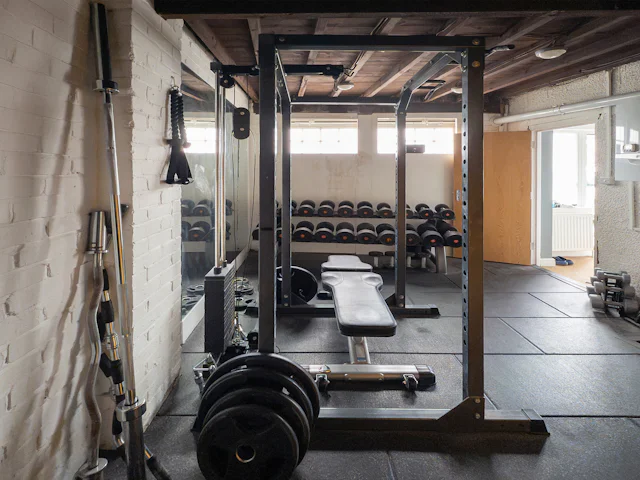
Limited evidenceThe most serious bench press accidents happen when a lifter fails a rep alone with the bar over the chest or neck. At home, bench inside a power rack with safety arms set just below your chest at the bottom of the rep, or use spotter arms.
Use a full grip with the thumb wrapped around the bar. If you ever bench without safeties, leave the collars off so the plates can be tilted off in an emergency. Stopping sets one to three reps short of failure keeps most sets well away from a failed rep without reducing strength gains [5].
Sets, reps and frequency
Strong evidenceHeavier loads build more strength, while muscle grows across a wide range of loads [6]. Most lifters do well with heavy work at 3–6 reps and growth work at 6–12 reps on a second day.
Benching two or three times a week tends to improve strength more than once a week, especially for multi-joint upper-body exercises [7]. Rest two to three minutes between heavy sets [8].
Variations by equipment
Dumbbell bench press
Adjustable dumbbells + bench
About 14–17% lower 1RM than the Smith machine or barbell, with similar chest and front-deltoid activity [2]. No spotter needed: you can drop the dumbbells to the side.
Incline bench press
Adjustable bench + barbell or dumbbells
A 30–45 degree incline shifts more of the work to the upper chest and front deltoids.
Close-grip bench press
Barbell + bench + rack
A narrow grip increases elbow demands and triceps involvement [1]; a common accessory for the lockout.
Smith machine bench press
Smith machine + bench
A fixed bar path with safety catches. Similar chest activity to a free barbell [2].
Floor press
Barbell or dumbbells
Pressing from the floor shortens the range. A workaround when you have no bench, not a replacement for full-range pressing.
Equipment for the bench press
Weight Benches
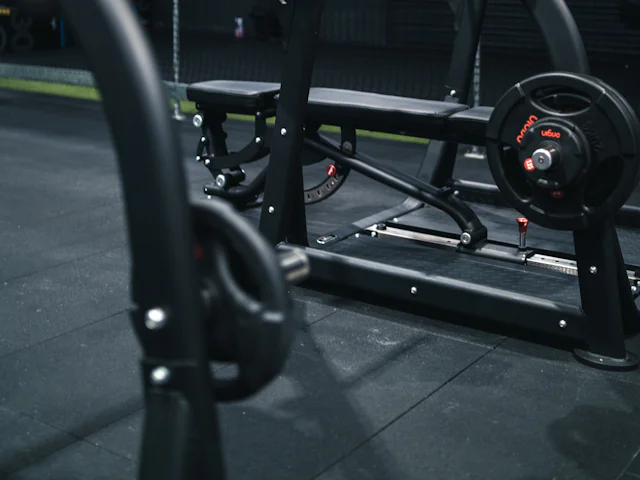
NeededA stable flat or adjustable bench. An adjustable FID bench adds incline pressing and dumbbell work.
Squat Racks
NeededA rack with safety arms or spotter arms lets you bench heavy alone: a failed rep rests on the safeties instead of your chest.
Barbells
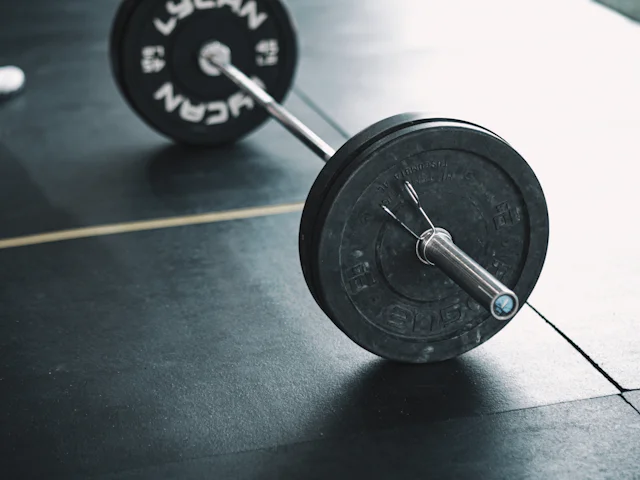
NeededAny 20 kg Olympic bar is suitable for the bench press.
Weight Plates
NeededSmaller plates (1.25 kg / 2.5 lb) matter here: bench progress comes in small jumps.
Adjustable Dumbbells
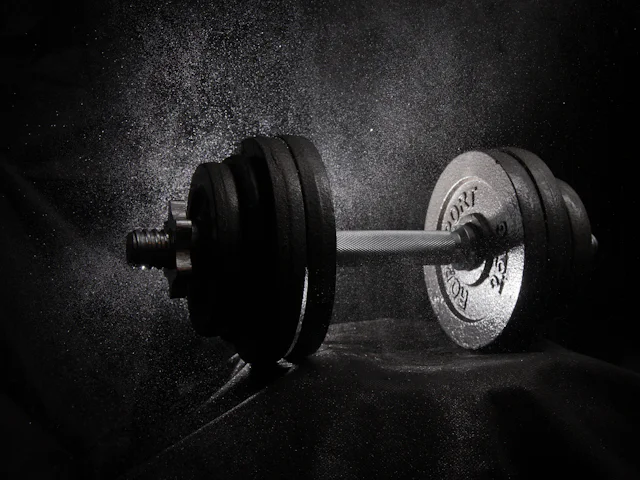
OptionalThe alternative to a rack and barbell: dumbbell pressing needs no spotter.
Common mistakes
- 1
Losing the shoulder-blade position
If the shoulders roll forward off the bench, the press becomes less stable and the bar path less consistent. Set the blades before unracking and keep them pinned.
- 2
Flaring the elbows to 90 degrees
Elbows straight out to the sides make the bar path harder to control and are uncomfortable for many lifters' shoulders. Tuck them to roughly 45–70 degrees.
- 3
Bouncing the bar off the chest
A bounce hides weakness at the bottom and makes reps inconsistent. Touch and press.
- 4
Benching heavy alone without safeties
Set safety arms below chest height, or switch to dumbbells when you train alone.
Practical takeaway
- 1Shoulder blades back and down, feet planted, bar to the lower chest.
- 2Use a medium grip as your default; a close grip as a triceps accessory.
- 3Dumbbells are a safe, effective alternative when you train alone.
- 4Bench two or three times a week, mostly one to three reps short of failure.
- 5Always bench inside a rack with safeties or with a spotter.
Conclusion
A good bench press is mostly a good setup: stable shoulder blades, planted feet and a consistent bar path. Grip width and bar or dumbbells are tools for adjusting the lift, not secrets that unlock it.
At home, safety is the deciding factor. A rack with safety arms or a set of adjustable dumbbells lets you press hard without a spotter.
References
- [1]Saeterbakken AH, Stien N, Pedersen H, Solstad TEJ, Cumming KT, Andersen V. The Effect of Grip Width on Muscle Strength and Electromyographic Activity in Bench Press among Novice- and Resistance-Trained Men. International Journal of Environmental Research and Public Health. 2021;18(12):6444. EMG and strength study doi.org/10.3390/ijerph18126444
- [2]Saeterbakken AH, van den Tillaar R, Fimland MS. A comparison of muscle activity and 1-RM strength of three chest-press exercises with different stability requirements. Journal of Sports Sciences. 2011;29(5):533–538. EMG and 1RM study doi.org/10.1080/02640414.2010.543916
- [3]Larsen S, Gomo O, van den Tillaar R. A Biomechanical Analysis of Wide, Medium, and Narrow Grip Width Effects on Kinematics, Horizontal Kinetics, and Muscle Activity on the Sticking Region in Recreationally Trained Males During 1-RM Bench Pressing. Frontiers in Sports and Active Living. 2021;2:637066. Biomechanics study doi.org/10.3389/fspor.2020.637066
- [4]Haugen ME, Vårvik FT, Larsen S, Haugen AS, van den Tillaar R, Bjørnsen T. Effect of free-weight vs. machine-based strength training on maximal strength, hypertrophy and jump performance – a systematic review and meta-analysis. BMC Sports Science, Medicine and Rehabilitation. 2023;15(1):103. Systematic review and meta-analysis doi.org/10.1186/s13102-023-00713-4
- [5]Robinson ZP, Pelland JC, Remmert JF, et al. Exploring the Dose-Response Relationship Between Estimated Resistance Training Proximity to Failure, Strength Gain, and Muscle Hypertrophy: A Series of Meta-Regressions. Sports Medicine. 2024;54(9):2209–2231. Meta-analysis (exploratory meta-regressions) doi.org/10.1007/s40279-024-02069-2
- [6]Lopez P, Radaelli R, Taaffe DR, et al. Resistance Training Load Effects on Muscle Hypertrophy and Strength Gain: Systematic Review and Network Meta-analysis. Medicine & Science in Sports & Exercise. 2021;53(6):1206–1216. Systematic review and network meta-analysis doi.org/10.1249/MSS.0000000000002585
- [7]Grgic J, Schoenfeld BJ, Davies TB, Lazinica B, Krieger JW, Pedisic Z. Effect of Resistance Training Frequency on Gains in Muscular Strength: A Systematic Review and Meta-Analysis. Sports Medicine. 2018;48(5):1207–1220. Systematic review and meta-analysis doi.org/10.1007/s40279-018-0872-x
- [8]Grgic J, Schoenfeld BJ, Skrepnik M, Davies TB, Mikulic P. Effects of rest interval duration in resistance training on measures of muscular strength: a systematic review. Sports Medicine. 2018;48(1):137–151. Systematic review doi.org/10.1007/s40279-017-0788-x
This guide summarises published research for healthy adults. It is general information, not medical advice — if you have a health condition, injury or take medication, talk to a qualified professional before changing your training, diet or supplements.