Evidence & Training · Hypertrophy
Machines vs Free Weights: Which Builds More Muscle and Strength?
What a meta-analysis of direct comparisons shows about free weights and machines, why strength is equipment-specific, and how to combine both — at home or in a gym.
Free-weight purists argue that barbells and dumbbells build “real” strength because you must stabilise the load yourself. Machine advocates point to safety, simplicity and the ability to push muscles hard without balance limiting the set. For anyone setting up a home gym, the question has a direct cost attached: a rack and barbell, a cable machine, or both?
Direct comparisons now let us answer the main question with reasonable confidence. For muscle growth, the equipment matters less than how you use it. For strength, the answer depends on how strength is tested.
This article summarises the evidence and shows how to choose and combine equipment.
Quick answer
Free weights and machines produce similar muscle growth, and similar strength when strength is measured fairly [1].
Strength gains are specific: you get better at the type of equipment you train with. Choose by goal, safety, access and preference — and use both if you can.
What the evidence says
Moderate evidenceA 2023 systematic review and meta-analysis included 13 studies, with 1,016 participants, that directly compared free-weight and machine-based training for at least six weeks. In direct comparisons, there were no differences between modalities for dynamic strength, isometric strength, jump performance or hypertrophy [1].
The specificity finding is the interesting part. Strength measured with free-weight tests increased more after free-weight training, and strength measured on machines tended to increase more after machine training [1]. In other words, both build strength; each makes you better at its own kind of test.
Why the results are so similar for growth
Moderate evidenceA muscle responds to the tension it experiences, not to the object producing it. A chest press machine and a dumbbell press both load the pectorals through a similar range; if both sets are taken close to failure with enough weekly volume, the stimulus is comparable. That is consistent with the broader finding that volume and effort, rather than specific exercises, drive most of the hypertrophy response [2].
Machines and cables offer some practical advantages for growth work: stable resistance makes it easier to push close to failure safely, and cables can load muscles well in the stretched position, which appears to be useful [3].
Where they genuinely differ
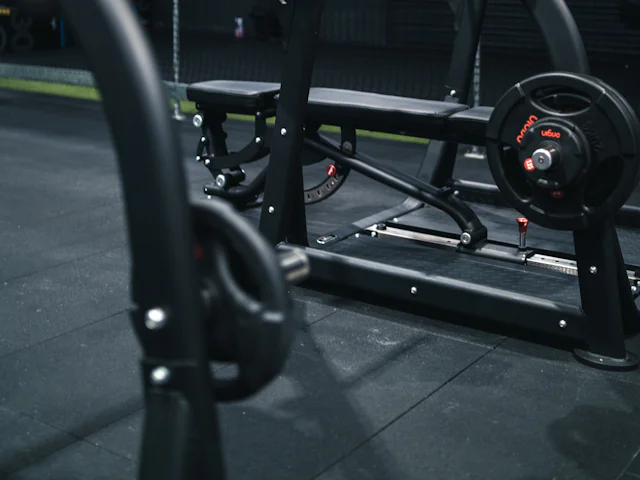
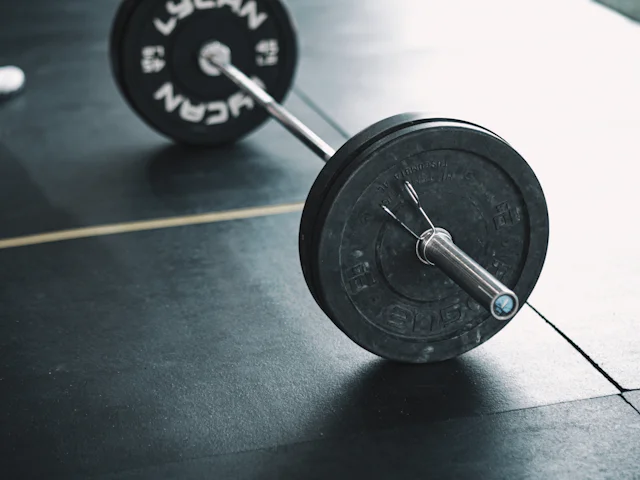
Limited evidenceFree weights demand balance and coordination, transfer more directly to lifting objects in daily life and sport, and are the only way to train for barbell lifts such as the squat, bench press and deadlift. They are also cheaper per exercise: a rack, barbell, plates and bench support dozens of movements.
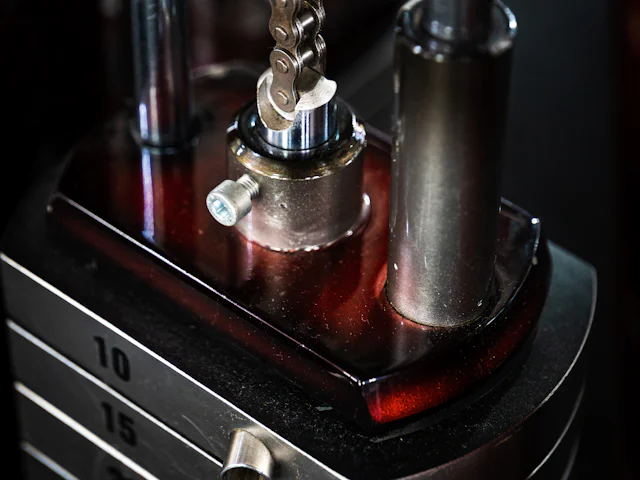
Machines reduce the skill and stabilisation demand, which suits beginners, lifters returning from injury and anyone training without a spotter. Cable stations in particular offer constant tension and many angles in one footprint. The trade-off is cost, size and, for selectorised machines, fixed movement paths that may not suit every body.
How to combine them
If strength on barbell lifts matters to you, those lifts need to be in your programme — specificity means a leg press will not fully prepare you for a heavy squat. Build the plan around a few free-weight compounds, then use machines, cables or dumbbells for the remaining volume.
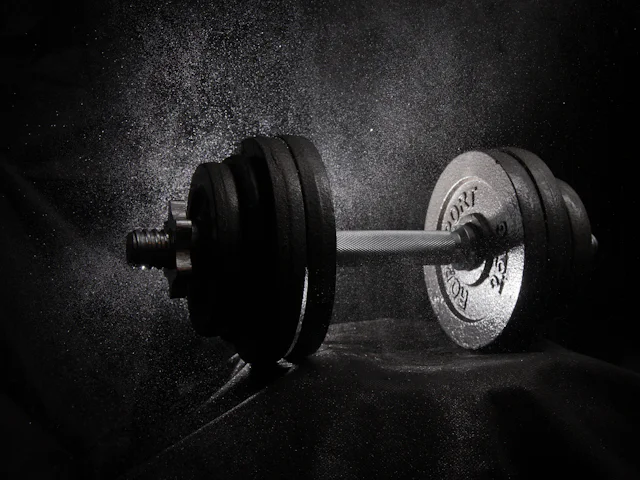
If hypertrophy is the main goal, choose whatever lets you train each muscle hard, safely and consistently. A home gym with adjustable dumbbells and a bench can build a great deal of muscle; adding a cable machine mostly increases exercise variety and comfort.
Common mistakes
- 1
Dismissing machines as “not functional”
For muscle growth, the evidence does not support a free-weight advantage [1]. Machines are a legitimate tool.
- 2
Judging strength only on one kind of test
A lifter who trained on machines will often test weaker on a barbell, and vice versa. That is specificity, not a failure of the method.
- 3
Buying equipment you will not use
The best home-gym setup is the one that matches your goals and space. A rack you never squat in is less useful than dumbbells you train with four times a week.
Practical takeaway
- 1Expect similar muscle growth from free weights and machines.
- 2Train the specific lifts you want to get strong at.
- 3Use free-weight compounds for strength and skill, machines and cables for safe, high-effort volume.
- 4Pick equipment by goal, budget, space and what you will use consistently.
- 5Combine both where possible for variety and joint comfort.
Conclusion
The free weights versus machines debate is mostly settled for hypertrophy: both work. For strength, each modality makes you better at itself, so your goal decides the mix.
That flexibility is good news when planning a home gym. Start with versatile free weights, add a cable or machine option when space and budget allow, and spend your effort on training hard rather than on choosing sides.
References
- [1]Haugen ME, Vårvik FT, Larsen S, Haugen AS, van den Tillaar R, Bjørnsen T. Effect of free-weight vs. machine-based strength training on maximal strength, hypertrophy and jump performance – a systematic review and meta-analysis. BMC Sports Science, Medicine and Rehabilitation. 2023;15(1):103. Systematic review and meta-analysis doi.org/10.1186/s13102-023-00713-4
- [2]Currier BS, D’Souza AC, Fiatarone Singh MA, et al. American College of Sports Medicine Position Stand. Resistance Training Prescription for Muscle Function, Hypertrophy, and Physical Performance in Healthy Adults: An Overview of Reviews. Medicine & Science in Sports & Exercise. 2026;58(4):851–872. Position stand (overview of 137 systematic reviews) doi.org/10.1249/MSS.0000000000003897
- [3]Maeo S, Huang M, Wu Y, et al. Greater Hamstrings Muscle Hypertrophy but Similar Damage Protection after Training at Long versus Short Muscle Lengths. Medicine & Science in Sports & Exercise. 2021;53(4):825–837. Within-subject training study doi.org/10.1249/MSS.0000000000002523
This guide summarises published research for healthy adults. It is general information, not medical advice — if you have a health condition, injury or take medication, talk to a qualified professional before changing your training, diet or supplements.