Evidence & Training · Exercise Guides
How to Squat: Technique, Depth and Muscles Worked
How to back squat step by step, how deep to go according to training studies, which muscles the squat builds, variations for home equipment and the rack setup it needs.
The squat is the most widely used lower-body exercise in strength training, and the one with the most opinions attached to it: how deep, how wide, whether the knees may pass the toes, whether it is bad for your back. Most of those debates can be settled, or at least narrowed, with the research that exists.
This guide covers how to perform the barbell back squat, what training studies show about depth and the muscles it builds, how to program it, and how to squat with the equipment you have at home — including what a safe home setup needs.
Quick answer
Squat with the bar on your upper back, feet about shoulder-width apart, and lower until your thighs are at least parallel if your mobility allows it: full-depth squats built more glute and adductor muscle than half squats in a 10-week trial [1].
Most lifters progress well on two or three sets of 3–8 reps per session, one to three reps short of failure, twice a week [2] [3]. At home, squat inside a rack with safety arms set just below your lowest position.
At a glance
- Movement
- Squat (knee and hip extension)
- Primary muscles
- Quadriceps, Gluteus maximus, Adductors
- Also works
- Spinal erectors, Calves, Core
- Level
- Intermediate
- Equipment
- Squat Racks, Barbells, Weight Plates
How to do the back squat: step by step
- 1
Set the bar in a rack at about mid-chest height and the safety arms just below the depth you will reach. Step under the bar and place it on your upper back, across the trapezius (high bar) or slightly lower across the rear shoulders (low bar).
- 2
Grip the bar as narrowly as your shoulders comfortably allow, pull your shoulder blades together and stand up to unrack it. Take two or three short steps back.
- 3
Set your feet about shoulder-width apart with the toes turned out slightly — commonly 15–30 degrees. Find the stance in which you can reach depth with your heels down.
- 4
Take a deep breath into your belly and brace as if about to be pushed. Keep that brace for the whole rep.
- 5
Sit down and back between your hips, letting the knees travel forward in line with the toes. Keep the bar over the middle of your foot.
- 6
Descend until your hip crease is at or below the top of your knee — or as deep as you can keep a neutral back — then drive up through the whole foot, keeping the chest and hips rising together. Breathe out at the top.
How deep should you squat?
Moderate evidenceDepth is the variable with the clearest training data. In a 10-week randomised trial, full squats and half squats produced similar growth of the knee extensors, but full squats produced significantly more growth of the gluteus maximus and adductors, and much larger gains in full-squat strength [1].
A 12-week study found that deep squats (to about 120 degrees of knee flexion) increased front-thigh muscle size more than shallow squats (to about 60 degrees), and improved isometric strength across more of the range and squat-jump performance [4]. Shallow squats did, however, build more strength in the shallow squat itself — strength is specific to the range you train.
This is in line with the wider evidence that full range of motion tends to produce more strength and lower-body muscle growth than partial range [5]. For most lifters, the practical target is at least parallel, or as deep as you can go while keeping a neutral spine and heels on the floor.
Muscles the squat builds
Moderate evidenceTraining studies measure muscle growth directly, which is more informative than muscle-activity (EMG) readings. Squat training reliably grows the vastus muscles of the quadriceps, the gluteus maximus and the adductors, but in the depth trial neither the rectus femoris nor the hamstrings grew [1].
The squat is therefore not a complete leg exercise. Hamstrings need a hinge such as the Romanian deadlift or a leg curl, and the rectus femoris benefits from knee extensions.
In a nine-week trial in untrained adults, back squats and hip thrusts produced similar glute growth, while squats produced more growth of the quadriceps and adductors [6].
Knees past toes, back angle and safety
Limited evidenceA review of squat biomechanics notes that knees moving forward over the toes is a normal part of a deep squat, and that restricting it shifts more stress to the hips and lower back [7]. Let the knees travel in line with your toes rather than trying to keep the shins vertical.
Front squats keep the torso more upright and, in a crossover study, produced lower compressive forces at the knee than back squats with similar overall muscle activity [8]. They are a sensible option for lifters whose knees tolerate back squats poorly.
Most of the risk at home comes from failing a heavy rep alone. That is a setup problem, not a technique one: squat in a rack with safety arms at the right height, or use spotters.
Sets, reps and frequency
Strong evidenceHeavier loads produce more strength, while muscle grows across a wide range of loads when sets are taken close to failure [9]. For strength, most squat sets fall between 3 and 6 reps; for muscle, 6–12 reps works well and is easier to recover from.
Strength gains are similar across a wide range of reps in reserve, so heavy squats do not need to be taken to failure — stopping one to three reps short keeps technique and recovery manageable [3]. Training a lift more often helps strength, particularly for multi-joint exercises [2].
Rest two to three minutes or more between heavy sets; longer rests support strength gains [10]. Our warm-up calculator builds the ramp-up sets from your working weight.
Variations by equipment
Front squat
Barbell + rack
Bar on the front of the shoulders. Similar overall muscle activity with lower compressive forces at the knee than the back squat [8].
Goblet squat
One dumbbell or kettlebell
The easiest way to learn depth and an upright torso; limited by how heavy a weight you can hold at the chest.
Dumbbell squat
Adjustable dumbbells
Dumbbells at the sides. Useful when there is no rack; grip and dumbbell weight become the limit for strong lifters.
Smith machine squat
Smith machine
A fixed bar path with built-in safety catches. Good for hypertrophy work; strength gains are specific to how you train [11].
Box squat
Barbell + rack + box or bench
Squat to a box set at the target depth. Teaches consistent depth and is useful for lifters who rush the bottom.
Equipment for the back squat
Squat Racks
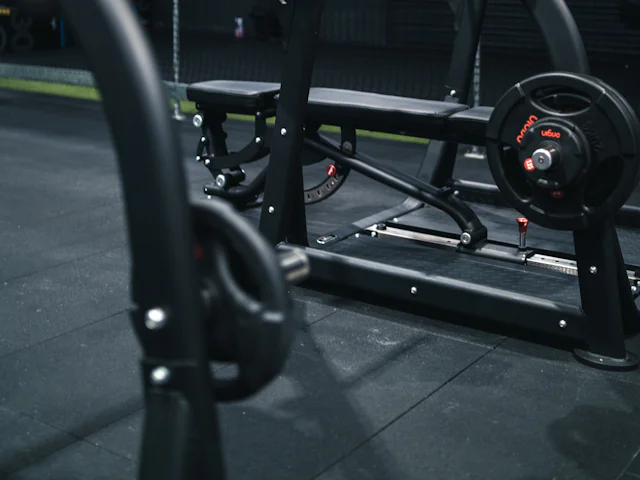
NeededA power rack or squat stand with safety arms is what makes heavy squatting alone safe: if a rep fails, you sit down and leave the bar on the safeties.
Barbells
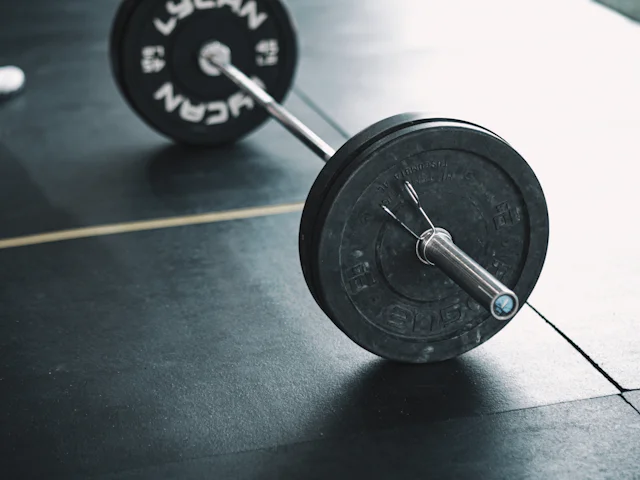
NeededA 20 kg Olympic bar with medium knurling suits squats and every other barbell lift.
Weight Plates
NeededEnough plates to progress for a year or more; bumper or iron both work for squats.
Lifting Belts
OptionalOptional. A belt can help some lifters brace on heavy sets; it does not replace learning to brace without one.
Gym Flooring
OptionalRubber flooring protects the floor and gives a stable, non-slip base.
Common mistakes
- 1
Cutting depth to lift more weight
Half squats build half-squat strength. Full-depth squats produced more glute and adductor growth and more full-range strength [1].
- 2
Forcing the knees back
Keeping the shins vertical moves stress to the hips and lower back; knees travelling forward in line with the toes are normal [7].
- 3
Losing the brace at the bottom
Breathe and brace before every rep and keep the pressure until you stand up. Relaxing at the bottom is where the back rounds.
- 4
Squatting heavy without safeties
At home, set the rack's safety arms just below your lowest position for every working set.
Practical takeaway
- 1Squat to at least parallel, or as deep as you can with a neutral back.
- 2Do most strength sets at 3–6 reps and growth sets at 6–12, one to three reps short of failure.
- 3Squat at least twice a week and rest two to three minutes between heavy sets.
- 4Add a hinge or leg curl for the hamstrings — squats do not grow them.
- 5Squat inside a rack with safety arms when you train alone.
Conclusion
The squat earns its place because it builds the quadriceps, glutes and adductors with a load you can increase for years. Full depth, controlled effort and frequent practice matter far more than the details of stance or bar position.
Set up a rack with safeties before you chase heavy numbers. Then track your sets and add weight gradually — the squat rewards patience more than any clever technique trick.
References
- [1]Kubo K, Ikebukuro T, Yata H. Effects of squat training with different depths on lower limb muscle volumes. European Journal of Applied Physiology. 2019;119(9):1933–1942. Randomized training study doi.org/10.1007/s00421-019-04181-y
- [2]Grgic J, Schoenfeld BJ, Davies TB, Lazinica B, Krieger JW, Pedisic Z. Effect of Resistance Training Frequency on Gains in Muscular Strength: A Systematic Review and Meta-Analysis. Sports Medicine. 2018;48(5):1207–1220. Systematic review and meta-analysis doi.org/10.1007/s40279-018-0872-x
- [3]Robinson ZP, Pelland JC, Remmert JF, et al. Exploring the Dose-Response Relationship Between Estimated Resistance Training Proximity to Failure, Strength Gain, and Muscle Hypertrophy: A Series of Meta-Regressions. Sports Medicine. 2024;54(9):2209–2231. Meta-analysis (exploratory meta-regressions) doi.org/10.1007/s40279-024-02069-2
- [4]Bloomquist K, Langberg H, Karlsen S, Madsgaard S, Boesen M, Raastad T. Effect of range of motion in heavy load squatting on muscle and tendon adaptations. European Journal of Applied Physiology. 2013;113(8):2133–2142. Randomized controlled trial doi.org/10.1007/s00421-013-2642-7
- [5]Pallarés JG, Hernández-Belmonte A, Martínez-Cava A, Vetrovsky T, Steffl M, Courel-Ibáñez J. Effects of range of motion on resistance training adaptations: A systematic review and meta-analysis. Scandinavian Journal of Medicine & Science in Sports. 2021;31(10):1866–1881. Systematic review and meta-analysis doi.org/10.1111/sms.14006
- [6]Plotkin DL, Rodas MA, Vigotsky AD, et al. Hip thrust and back squat training elicit similar gluteus muscle hypertrophy and transfer similarly to the deadlift. Frontiers in Physiology. 2023;14:1279170. Randomized training study doi.org/10.3389/fphys.2023.1279170
- [7]Schoenfeld BJ. Squatting Kinematics and Kinetics and Their Application to Exercise Performance. Journal of Strength and Conditioning Research. 2010;24(12):3497–3506. Narrative review doi.org/10.1519/JSC.0b013e3181bac2d7
- [8]Gullett JC, Tillman MD, Gutierrez GM, Chow JW. A Biomechanical Comparison of Back and Front Squats in Healthy Trained Individuals. Journal of Strength and Conditioning Research. 2009;23(1):284–292. Biomechanics study doi.org/10.1519/JSC.0b013e31818546bb
- [9]Lopez P, Radaelli R, Taaffe DR, et al. Resistance Training Load Effects on Muscle Hypertrophy and Strength Gain: Systematic Review and Network Meta-analysis. Medicine & Science in Sports & Exercise. 2021;53(6):1206–1216. Systematic review and network meta-analysis doi.org/10.1249/MSS.0000000000002585
- [10]Grgic J, Schoenfeld BJ, Skrepnik M, Davies TB, Mikulic P. Effects of rest interval duration in resistance training on measures of muscular strength: a systematic review. Sports Medicine. 2018;48(1):137–151. Systematic review doi.org/10.1007/s40279-017-0788-x
- [11]Haugen ME, Vårvik FT, Larsen S, Haugen AS, van den Tillaar R, Bjørnsen T. Effect of free-weight vs. machine-based strength training on maximal strength, hypertrophy and jump performance – a systematic review and meta-analysis. BMC Sports Science, Medicine and Rehabilitation. 2023;15(1):103. Systematic review and meta-analysis doi.org/10.1186/s13102-023-00713-4
This guide summarises published research for healthy adults. It is general information, not medical advice — if you have a health condition, injury or take medication, talk to a qualified professional before changing your training, diet or supplements.