How to Get Stronger: The Evidence-Based Basics
The training variables that improve maximal strength — load, volume, frequency, range of motion, exercise order — and a practical way to apply them at home.
The short answer
Strength improves most with heavy loads (around 80% of your max or more), 2–3 sets per exercise, full range of motion, the main lift early in the session and at least two sessions a week.
What the evidence says
The 2026 ACSM position stand reported that voluntary strength was enhanced by heavier loads (≥80% of one-rep max), a complete range of motion, 2–3 sets, doing the exercise at the beginning of the session, and two or more sessions per week.
Meta-analyses add that strength responds to weekly set volume in a dose-response way and that heavy loads beat light loads for one-rep-max strength.
A practical structure
- Pick 3–4 main lifts (e.g. squat, bench press, deadlift, overhead press).
- Train each 2–3 times a week, first in the session, with 2–3 heavy sets of 2–6 reps at RPE 7–9.
- Add assistance work for volume (rows, lunges, dumbbell presses) at moderate loads.
- Rest 2–3+ minutes between heavy sets.
- Add load in small steps; when progress stalls, reduce volume for a week and rebuild.
Evidence: [4]
Training heavy at home
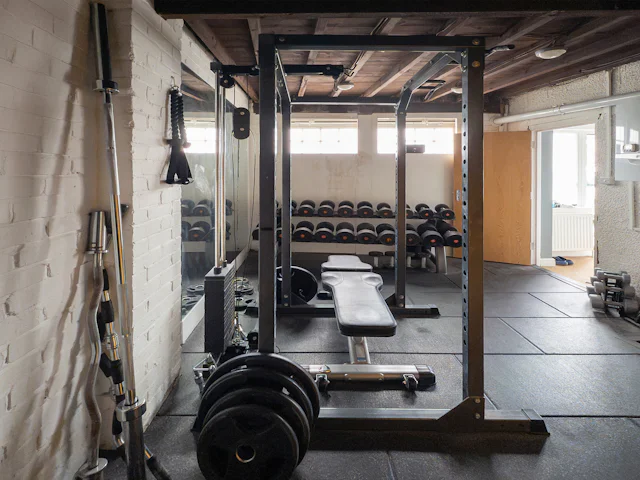
Heavy barbell work at home needs a rack with safety arms, a bar you trust and flooring that protects the floor. Train alone only with safeties set at the right height.
Common mistakes
- Only training in the 10–15 rep range and expecting a big max.
- Partial reps on the main lifts.
- Testing a max every week instead of training.
Bottom line
Lift heavy, often enough, through a full range of motion, and add weight patiently.
References
- [1] Currier BS, D’Souza AC, Fiatarone Singh MA, et al. American College of Sports Medicine Position Stand. Resistance Training Prescription for Muscle Function, Hypertrophy, and Physical Performance in Healthy Adults: An Overview of Reviews. Medicine & Science in Sports & Exercise. 2026;58(4):851–872. Position stand (overview of 137 systematic reviews) doi.org/10.1249/MSS.0000000000003897
- [2] Ralston GW, Kilgore L, Wyatt FB, Baker JS. The effect of weekly set volume on strength gain: a meta-analysis. Sports Medicine. 2017;47(12):2585–2601. Meta-analysis doi.org/10.1007/s40279-017-0762-7
- [3] Schoenfeld BJ, Grgic J, Ogborn D, Krieger JW. Strength and hypertrophy adaptations between low- vs. high-load resistance training: a systematic review and meta-analysis. Journal of Strength and Conditioning Research. 2017;31(12):3508–3523. Systematic review and meta-analysis doi.org/10.1519/JSC.0000000000002200
- [4] Grgic J, Schoenfeld BJ, Skrepnik M, Davies TB, Mikulic P. Effects of rest interval duration in resistance training on measures of muscular strength: a systematic review. Sports Medicine. 2018;48(1):137–151. Systematic review doi.org/10.1007/s40279-017-0788-x
This guide summarises published research for healthy adults. It is general information, not medical advice — if you have a health condition, injury or take medication, talk to a qualified professional before changing your training or supplements.