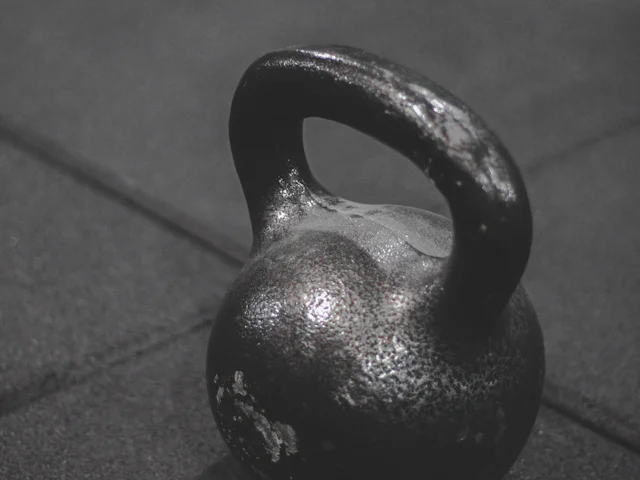
Best Overall
REP Cast Iron Kettlebell
A well-finished cast-iron bell with a handle owners rate for swings
Cast iron · 1–32 kg (16 kg reviewed)
8.3 / 10 LiftEvidence score
A kettlebell is simple, but the details decide whether it is pleasant to swing for years: the handle’s diameter and finish, how the bell sits on the forearm, and whether the coating survives chalk, sweat and drops.
We compared eight kettlebells sold on Amazon.com — cast iron, competition and adjustable — each in a specific weight. Specifications come from manufacturers and Amazon listings, customer notes summarise recurring review themes, and the LiftEvidence score is our weighted editorial assessment.
By the LiftEvidence editorial team · Updated October 7, 2026 · 8 products compared · Affiliate disclosure
For most people the REP Fitness cast-iron kettlebell is the best buy: a handle owners consistently rate for swings, a solid powder-coated body and kilogram steps from 1 to 32 kg. If you train kettlebell sport or high-rep snatches, the Titan competition bell keeps the same size and 35 mm handle at every weight.
For small spaces, the Bowflex SelectTech 840 replaces six bells from 8 to 40 lb, and the Bells of Steel adjustable keeps competition geometry with 0.5 kg steps. The Amazon Basics bell is the budget pick.
Cast-iron bells with wide handles for two-hand swings. REP has the best-rated handle, Lifeline the premium casting; Amazon Basics and Yes4All are the budget routes (Yes4All goes to 88 lb).
REP Cast Iron Kettlebell · Lifeline Kettlebell · Amazon Basics Kettlebell · Yes4All Powder Coated
Compare side by sideCompetition geometry and 35 mm handles at every weight; the Bells of Steel adds fine, adjustable steps.
Titan Competition Kettlebell · Bells of Steel Adjustable KB
Compare side by sideAdjustable bells that replace several fixed ones — quick to change, but bulkier and limited in maximum weight.
Bowflex SelectTech 840 · REP Adjustable Kettlebell
Compare side by sideEditorial picks for specific needs, based on the specifications and trade-offs recorded below. A label is given only where a product clearly earns it.
Best Overall
A well-finished cast-iron bell with a handle owners rate for swings
Cast iron · 1–32 kg (16 kg reviewed)
8.3 / 10 LiftEvidence score
Best Competition Kettlebell
Same size and 35 mm handle at every weight, for consistent technique
Competition (steel) · Range of competition weights (16 kg reviewed)
8.6 / 10 LiftEvidence score
Best Budget
The cheapest solid cast-iron bell with an enormous review base
Cast iron · Many pound weights (25 lb reviewed)
7.1 / 10 LiftEvidence score
Best Adjustable Kettlebell
One dial replaces six bells from 8 to 40 lb
Adjustable · 8, 12, 20, 25, 35, 40 lb
7.7 / 10 LiftEvidence score
Best Adjustable Competition
A competition-shape steel shell that adjusts from 12 to 20.5 kg in 0.5 kg steps
Adjustable · 12–20.5 kg (18 settings)
8.2 / 10 LiftEvidence score
Showing 8 of 8. Add up to 4 to a comparison.
Best Overall
A well-finished cast-iron bell with a handle owners rate for swings
8.3
Best Competition Kettlebell
Same size and 35 mm handle at every weight, for consistent technique
8.6
Virgin-iron, seamless casting with a machined flat base
8.0
Best Budget
The cheapest solid cast-iron bell with an enormous review base
7.1
Best Adjustable Kettlebell
One dial replaces six bells from 8 to 40 lb
7.7
Best Adjustable Competition
A competition-shape steel shell that adjusts from 12 to 20.5 kg in 0.5 kg steps
8.2
A steel adjustable bell that changes weight with a push and twist
7.5
Budget powder-coated cast iron in the widest weight range here (9–88 lb)
7.1
The same criteria for every product. A dash means the information was not published or could not be confirmed. Scores are editorial assessments, not measurements.
| 8 products | Check price on Amazon → | Check price on Amazon → | Check price on Amazon → | Check price on Amazon → | Check price on Amazon → | Check price on Amazon → | Check price on Amazon → | Check price on Amazon → |
|---|---|---|---|---|---|---|---|---|
| Editorial summary (LiftEvidence) | ||||||||
| LiftEvidence score | 8.3 / 10 | 8.6 / 10 (highest) | 8.0 / 10 | 7.1 / 10 | 7.7 / 10 | 8.2 / 10 | 7.5 / 10 | 7.1 / 10 |
| Recommendation | Best Overall | Best Competition Kettlebell | — | Best Budget | Best Adjustable Kettlebell | Best Adjustable Competition | — | — |
| Best suited to | Swings & Ballistics, General Strength, Conditioning | Kettlebell Sport, Swings & Ballistics, Conditioning | Swings & Ballistics, General Strength, Conditioning | Budget, Beginner, General Strength | Small Spaces, General Strength, Beginner | Kettlebell Sport, Small Spaces, Swings & Ballistics | Small Spaces, General Strength, Conditioning | Budget, General Strength, Conditioning |
| Handle comfort | Excellent | Good | Good | Moderate | Good | Good | Good | Good |
| Specifications (manufacturer) | ||||||||
| Type | Cast iron | Competition (steel) | Cast iron | Cast iron | Adjustable | Adjustable | Adjustable | Cast iron |
| Weights available | 1–32 kg (16 kg reviewed) | Range of competition weights (16 kg reviewed) | Multiple weights (24 kg reviewed) | Many pound weights (25 lb reviewed) | 8, 12, 20, 25, 35, 40 lb | 12–20.5 kg (18 settings) | 40 lb model reviewed (heavier versions sold) | 9–88 lb (listing default: 22 lb) |
| Sold as | Single bell | Single bell | Single bell | Single bell | Single adjustable bell | Single adjustable bell with plates | Single adjustable bell | Single bell (sets also sold) |
| Handle diameter | — | 35 mm | — | — | — | 35 mm | — | — |
| Handle finish | Textured matte powder coat | Smooth, lightly textured | Matte powder coat | Smooth, wide handle | — | — | Matte powder coat | Wide, smooth handle |
| Body finish | Powder coat with colour-coded ring | Colour-coded, laser-etched kg markings | Matte black powder coat | Enamel / powder coat | — | Steel competition shell | — | Powder coat |
| Same size at every weight | No | Yes | No | No | — | Yes | — | No |
| Flat base | Yes | — | Yes | — | — | — | — | Yes |
| Warranty | — | — | — | — | — | — | — | — |
| Price & customer ratings (Amazon) | ||||||||
| Price band | Mid-range | Mid-range | Premium | Budget | Mid-range | Premium | Mid-range | Budget |
| Amazon customer rating | 4.8/5 (1,091 ratings) | 4.8/5 (105 ratings) | 4.7/5 (968 ratings) | 4.8/5 (28,442 ratings) | 4.8/5 (6,168 ratings) | 4.7/5 (67 ratings) | 4.6/5 (148 ratings) | 4.6/5 (4,971 ratings) |
| Editorial assessment (LiftEvidence) | ||||||||
| Less suitable for | Kettlebell sport, where competition bells keep the same size at every weight. | Two-hand swings with a wide grip, or buyers who want a cheaper cast-iron bell. | Budget buyers, or those who need identical sizing across weights. | High-rep ballistic work with sweaty hands, or anyone who drops bells on hard floors. | Heavy swings beyond 40 lb, or ballistic work where a compact solid bell sits better on the forearm. | Quick changes mid-workout, or loads above 20.5 kg. | Kettlebell sport or anyone needing many fine weight steps. | Anyone who wants a finish that lasts years of daily ballistic use. |
| Strengths |
|
|
|
|
|
|
|
|
| Drawbacks |
|
|
|
|
|
|
|
|
| Handle quality score | 9.0 / 10 (highest) | 8.5 / 10 | 8.0 / 10 | 6.5 / 10 | 7.0 / 10 | 8.5 / 10 | 7.5 / 10 | 7.0 / 10 |
| Build & finish score | 8.5 / 10 | 9.0 / 10 (highest) | 9.0 / 10 (highest) | 7.0 / 10 | 7.0 / 10 | 8.5 / 10 | 8.0 / 10 | 6.5 / 10 |
| Accuracy & consistency score | 7.5 / 10 | 9.5 / 10 (highest) | 7.5 / 10 | 6.5 / 10 | 7.5 / 10 | 8.5 / 10 | 7.0 / 10 | 6.5 / 10 |
| Versatility score | 8.5 / 10 (highest) | 8.0 / 10 | 8.0 / 10 | 7.0 / 10 | 8.0 / 10 | 8.0 / 10 | 7.5 / 10 | 8.0 / 10 |
| Specification transparency score | 6.5 / 10 | 8.5 / 10 (highest) | 7.0 / 10 | 6.0 / 10 | 8.0 / 10 | 8.5 / 10 (highest) | 6.5 / 10 | 6.0 / 10 |
| Owner feedback score | 9.0 / 10 (highest) | 8.0 / 10 | 8.5 / 10 | 8.5 / 10 | 9.0 / 10 (highest) | 7.5 / 10 | 8.0 / 10 | 7.5 / 10 |
| Value score | 8.0 / 10 | 8.0 / 10 | 7.0 / 10 | 9.0 / 10 (highest) | 8.5 / 10 | 7.5 / 10 | 7.5 / 10 | 8.5 / 10 |
What matters most
The handle matters most
A smooth but not slick handle, without seams or burrs, is what makes high-rep swings comfortable. Two-hand swings need a wide window; one-hand cleans and snatches prefer a narrower, consistent handle.
Cast iron or competition
Cast-iron bells grow larger as they get heavier; competition bells keep the same size and 35 mm handle at every weight, so technique stays consistent. For general training, cast iron is cheaper and comfortable for two hands.
Finish: powder coat over gloss
Powder coat holds chalk and grip; glossy enamel and paint get slippery and chip. Recurring reports of peeling coatings are worth weighing.
Adjustable bells save space
Adjustables replace several bells but are bulkier or need tools, and most stop at 40 lb or around 20 kg.
Buy in sensible steps
A common starting point is one moderate bell for swings and one lighter bell for presses and get-ups; add heavier bells as you progress.
The handle decides comfort. Too thick and grip fails early; too thin and it digs in. Competition bells use a consistent 35 mm handle; cast-iron bells vary and few publish the diameter.
Finish matters as much: a fine powder coat holds chalk and stays grippy; glossy paint and enamel get slippery with sweat. Seams and burrs from cheap casting can tear hands — a recurring complaint worth checking in reviews.
Cast-iron bells get bigger as they get heavier, which changes how the bell sits in the rack position and on the forearm. Competition bells are hollow steel shells filled to weight, so every bell is the same size.
For two-hand swings, goblet squats and general training, cast iron is cheaper and comfortable. For kettlebell sport, high-rep snatches and consistent technique across weights, competition bells are better.
Related: REP Cast Iron Kettlebell · Titan Competition Kettlebell
Adjustables save space and money if you would otherwise buy four to six bells. The trade-offs are a bulkier shape or a tool-based change, and a maximum that many lifters outgrow for swings.
Choose a dial model for quick changes and general fitness; a competition-shape adjustable for sport-style training with fine increments.
Related: Bowflex SelectTech 840 · Bells of Steel Adjustable KB
Swings use your hips and tolerate heavier bells than presses, get-ups or snatches. A common approach is a moderate bell for swings and a lighter one for presses and get-ups, adding heavier bells as you progress.
Kilogram steps of 4 kg are standard for kettlebell training; pound steps are fine for general fitness.
Kettlebells are not designed to be dropped on concrete — coatings chip and floors crack. Train on rubber flooring and set the bell down rather than letting it fall. Recurring reports of peeling coatings are the most common durability issue in budget bells.
We shortlisted kettlebells available on Amazon.com and compared each on handle quality (20%), build and finish (20%), accuracy and consistency (15%), versatility (15%), specification transparency (10%), owner feedback (10%) and value (10%).
Each bell is reviewed in the weight shown; other weights on the same listing differ in price and size. Customer themes come from Amazon reviews and are reported as user experience. We have not tested these kettlebells.
Cast iron for general training and two-hand swings; competition for kettlebell sport, high-rep snatches and consistent technique across weights.
Choose by exercise, not by a single number: a heavier bell for swings and a lighter one for presses and get-ups. If unsure, start conservatively — you can add a heavier bell once your technique is consistent.
For general fitness in a small space, yes. For heavy swings or kettlebell sport, fixed bells are more compact, more durable and go heavier.
Cheap casting can leave seams and burrs; glossy coatings get slippery. A fine powder coat with chalk is the most comfortable. Light sanding can remove small burrs on cast iron.
Product specifications come from manufacturers and their Amazon.com listings (each product page lists its sources); customer themes come from Amazon reviews and are reported as user experience, not as evidence. Ratings and review counts were checked on October 7, 2026. LiftEvidence scores are editorial assessments; we have not tested these products ourselves. First published October 7, 2026.