Evidence & Training · Strength
How to Increase Your Bench Press
How to build a bigger bench press with frequency, heavy practice, enough volume, accessory work for the chest, shoulders and triceps, and the right equipment.
The bench press is the lift most gym-goers want to improve, and the one where progress stalls most visibly. After the easy beginner gains, adding even 5 kg can take months — which pushes many lifters toward gimmicks, max-out sessions and endless program-hopping.
Specific bench press studies are fewer than general strength research, so this guide applies the broader evidence on strength training to the bench: heavy specific practice, adequate frequency, enough volume for the muscles involved and a plan that manages fatigue.
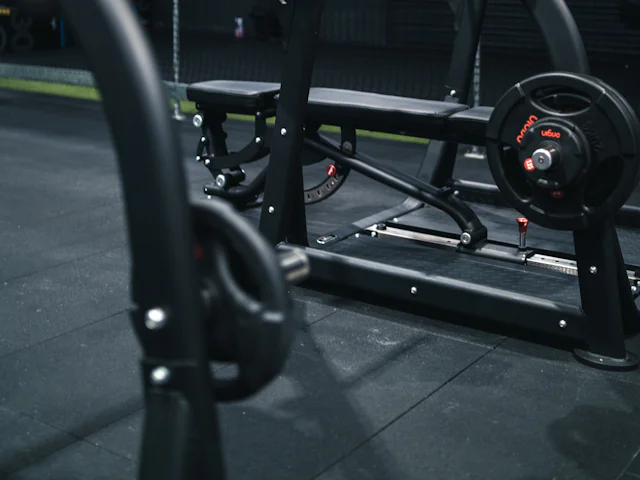
We also cover technique principles and equipment, because a stable bench and a safe setup matter more for this lift than for most.
Quick answer
Bench press two or three times a week, with most sets at 3–6 reps and 1–3 reps in reserve, plus a lighter or higher-rep day and accessory work for chest, shoulders and triceps [1] [2].
Progress gradually over blocks of a few weeks, rest at least two to three minutes between heavy sets, and use a stable bench with safeties or a spotter [3].
Bench more often
Moderate evidenceStrength gains increase with training frequency, and a meta-analysis found the effect was clearest for multi-joint exercises and the upper body [1]. Newer meta-regressions also found strength gains increasing with frequency, albeit with diminishing returns [4].
For most lifters, moving from one bench session per week to two or three — without simply tripling total volume — is one of the most reliable ways to restart progress.
Practise heavy, not maximal
Strong evidenceHeavier loads produce greater strength gains than lighter loads [2] [5], but strength gains are similar across a wide range of reps in reserve [6]. That combination means heavy sets of 3–6 reps, stopped one to three reps short of failure, are the core of bench training.
Save true maximal attempts for planned tests every few months. Frequent max-outs show strength but build very little of it.
Build the muscles that press
Moderate evidenceThe bench press relies on the pectorals, front deltoids and triceps. Over time, more muscle in those areas raises your strength ceiling. Weekly volume drives growth, with diminishing returns [4], so moderate-rep pressing variations and triceps work deserve a place alongside heavy benching.
Even a minimal dose produces strength: a single weekly set taken to failure, one to three times per week, increased bench press 1RM in trained men by about 8 kg on average across studies — but this was described as suboptimal [7]. Most lifters progress better with more.
Technique and setup principles
Limited evidenceA stable base matters: shoulder blades pulled back and down, a slight arch that keeps the upper back tight, feet planted to create leg drive, and a consistent bar path touching the lower chest. Grip width is individual; a moderately wide grip usually shortens the range, while a closer grip increases triceps involvement.
These are coaching principles rather than findings from large trials, but they share one goal: making each rep repeatable so that progress reflects strength, not variable technique.
A sample bench week
Common mistakes
- 1
Maxing out every week
Testing is not training. Heavy sets below your max build the strength that a test only reveals.
- 2
Benching once a week with huge volume
Strength appears to benefit from more frequent practice [1]. Two or three moderate sessions usually beat one exhausting one.
- 3
Ignoring the upper back
A strong, stable upper back gives the press a solid base. Rows and pulldowns support the bench as well as balance the shoulders.
- 4
Training without safeties at home
Heavy benching alone without spotter arms or safety straps is a genuine risk. Set safeties just below chest height.
Practical takeaway
- 1Bench 2–3 times per week with a heavy day and a lighter/volume day.
- 2Keep heavy sets at 3–6 reps with 1–3 reps in reserve.
- 3Add chest, shoulder and triceps accessories at 8–15 reps.
- 4Rest 2–3 minutes or more between heavy sets.
- 5Run 4–6 week blocks and test your max only occasionally.
- 6Use a stable bench and rack safeties when training alone.
Conclusion
A bigger bench press comes from frequent, heavy, high-quality practice backed by muscle growth in the chest, shoulders and triceps. None of this is exotic, but it requires structure and patience.
Set up a stable, safe station, follow a block-based plan and let small weekly improvements accumulate. That is how bench numbers that stalled for months start moving again.
References
- [1]Grgic J, Schoenfeld BJ, Davies TB, Lazinica B, Krieger JW, Pedisic Z. Effect of Resistance Training Frequency on Gains in Muscular Strength: A Systematic Review and Meta-Analysis. Sports Medicine. 2018;48(5):1207–1220. Systematic review and meta-analysis doi.org/10.1007/s40279-018-0872-x
- [2]Schoenfeld BJ, Grgic J, Ogborn D, Krieger JW. Strength and hypertrophy adaptations between low- vs. high-load resistance training: a systematic review and meta-analysis. Journal of Strength and Conditioning Research. 2017;31(12):3508–3523. Systematic review and meta-analysis doi.org/10.1519/JSC.0000000000002200
- [3]Grgic J, Schoenfeld BJ, Skrepnik M, Davies TB, Mikulic P. Effects of rest interval duration in resistance training on measures of muscular strength: a systematic review. Sports Medicine. 2018;48(1):137–151. Systematic review doi.org/10.1007/s40279-017-0788-x
- [4]Pelland JC, Remmert JF, Robinson ZP, Hinson SR, Zourdos MC. The Resistance Training Dose Response: Meta-Regressions Exploring the Effects of Weekly Volume and Frequency on Muscle Hypertrophy and Strength Gains. Sports Medicine. 2026;56(2):481–505. Systematic review with meta-regressions (67 studies) doi.org/10.1007/s40279-025-02344-w
- [5]Lopez P, Radaelli R, Taaffe DR, et al. Resistance Training Load Effects on Muscle Hypertrophy and Strength Gain: Systematic Review and Network Meta-analysis. Medicine & Science in Sports & Exercise. 2021;53(6):1206–1216. Systematic review and network meta-analysis doi.org/10.1249/MSS.0000000000002585
- [6]Robinson ZP, Pelland JC, Remmert JF, et al. Exploring the Dose-Response Relationship Between Estimated Resistance Training Proximity to Failure, Strength Gain, and Muscle Hypertrophy: A Series of Meta-Regressions. Sports Medicine. 2024;54(9):2209–2231. Meta-analysis (exploratory meta-regressions) doi.org/10.1007/s40279-024-02069-2
- [7]Androulakis-Korakakis P, Fisher JP, Steele J. The Minimum Effective Training Dose Required to Increase 1RM Strength in Resistance-Trained Men: A Systematic Review and Meta-Analysis. Sports Medicine. 2020;50(4):751–765. Systematic review and meta-analysis doi.org/10.1007/s40279-019-01236-0
- [8]Moesgaard L, Beck MM, Christiansen L, Aagaard P, Lundbye-Jensen J. Effects of Periodization on Strength and Muscle Hypertrophy in Volume-Equated Resistance Training Programs: A Systematic Review and Meta-analysis. Sports Medicine. 2022;52(7):1647–1666. Systematic review and meta-analysis doi.org/10.1007/s40279-021-01636-1
This guide summarises published research for healthy adults. It is general information, not medical advice — if you have a health condition, injury or take medication, talk to a qualified professional before changing your training, diet or supplements.