Evidence & Training · Exercise Guides
Romanian Deadlift: How to Do It and What It Builds
How to do the Romanian deadlift (RDL) step by step, what research shows about the hamstrings and glutes it trains, how it differs from the conventional deadlift, and dumbbell or barbell options at home.
The Romanian deadlift (RDL) is a hip hinge: the bar starts at the hips, the knees stay softly bent, and the hips travel back until the hamstrings are stretched. It is one of the few compound exercises that loads the hamstrings heavily at long muscle lengths, which is why it appears in nearly every hypertrophy and athletic programme.
It is also easy to do badly — turning it into a squat, rounding the back to reach the floor, or cutting the range short. This guide explains the technique, what the research says about the muscles it trains, and how to fit it into a week.
Quick answer
Hold the bar at your hips, unlock the knees slightly and push the hips back while keeping the back neutral, lowering the bar along the legs until you feel a strong hamstring stretch — usually around mid-shin — then drive the hips forward to stand.
Stiff-leg deadlift training grew the hamstrings in a randomised trial [1], while the conventional deadlift showed more quadriceps (rectus femoris) and glute activity than the RDL [2]. Use 2–4 sets of 6–12 reps, one to three reps short of failure.
At a glance
- Movement
- Hip hinge
- Primary muscles
- Hamstrings, Gluteus maximus
- Also works
- Spinal erectors, Adductors, Forearms (grip)
- Level
- Beginner-friendly
- Equipment
- Barbells, Weight Plates
How to do the Romanian deadlift: step by step
- 1
Start standing with the bar at your hips: take it from a rack set at mid-thigh, or deadlift it from the floor for the first rep. Hold it with an overhand grip just outside the thighs.
- 2
Stand with feet about hip-width apart. Unlock the knees slightly — they stay in that softly bent position for the whole set.
- 3
Brace your trunk and push your hips straight back, as if closing a car door with your backside. The torso tilts forward as a result of the hips moving back.
- 4
Keep the bar in contact with, or very close to, your thighs and shins, with your shoulders pulled slightly back so the upper back does not round.
- 5
Lower until you feel a strong stretch in the hamstrings without your lower back rounding — for most people around knee to mid-shin height. Touching the floor is not required.
- 6
Drive the hips forward to stand tall, squeezing the glutes at the top without leaning back.
Muscles worked: what the research shows
Moderate evidenceThe RDL's primary targets are the hamstrings and glutes. In a blinded randomised trial, nine weeks of stiff-leg deadlift training — a very similar straight-leg hinge — increased whole-hamstring volume by about 7%, with the largest change in the semimembranosus [1]. A Nordic hamstring group grew mainly the semitendinosus instead, which suggests that hinges and knee-flexion exercises complement each other.
Compared with the conventional deadlift at the same relative load, the RDL showed lower rectus femoris and gluteus maximus activity, and the conventional lift produced greater knee and ankle joint torques [2]. In plain terms, the RDL takes most of the quadriceps out of the lift and leaves the hips to do the work.
The RDL also loads the hamstrings in a stretched position. In a leg-curl study, training the hamstrings at long lengths produced more growth than training them at short lengths [3]. The RDL has not been compared directly in that way, but the same lengthened loading is a common reason coaches use it.
RDL vs conventional deadlift
Limited evidenceThe conventional deadlift starts from the floor with bent knees and uses the quadriceps, glutes and back to break the bar from the ground; it is the better test of total pulling strength and allows heavier loads. The RDL starts from the top, keeps the knees nearly fixed and emphasises the hip extensors through a long range.
Most programmes use both, or the RDL as the hinge for lifters who do not need a maximal deadlift. See our guide to the conventional deadlift for the floor version.
Sets, reps and where it fits
Strong evidenceMuscle grows across a wide range of loads when sets are taken close to failure [4], so the RDL works well at 6–12 reps, where form is easier to keep than with very heavy triples. Two to four hard sets once or twice a week is a reasonable starting dose; weekly set volume drives growth with diminishing returns [5].
Stop each set one to three reps before your back position starts to change, and control the lowering phase so you feel the stretch at the bottom. If grip limits the set, straps let the hamstrings do the work.
Is the RDL bad for your back?
Limited evidenceHinge exercises are routinely used in rehabilitation. In a randomised trial in people with recurrent low back pain, a programme built on the deadlift improved pain intensity and strength about as much as low-load motor control exercises, although the motor control group improved more on activity and movement control [6].
That does not make every RDL safe — load, fatigue and technique still matter. Keep the range to what you can control with a neutral spine, and progress the load gradually [7].
Variations by equipment
Dumbbell RDL
Adjustable dumbbells
The same hinge with a dumbbell in each hand. Easy to set up at home; grip becomes the limit before the hamstrings for strong lifters.
Single-leg RDL
Dumbbells or kettlebells
Much lighter loads, more balance demand. Useful when weight is limited or to train each side separately.
Trap bar RDL
Trap bar
The load sits at your sides, which some lifters find easier on the lower back.
Stiff-leg deadlift
Barbell
Each rep starts from the floor with straighter knees. In a 9-week trial it produced whole-hamstring growth, mostly in the semimembranosus [1].
Cable pull-through
Cable machine
A hinge with the load pulling backwards between the legs; lighter on the back and good for learning the movement.
Equipment for the Romanian deadlift
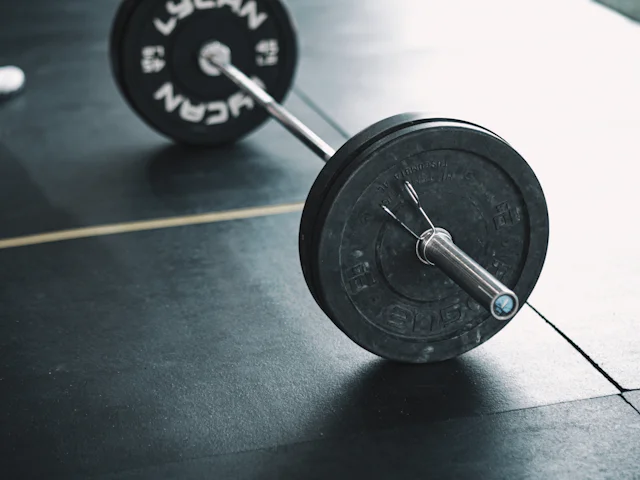
Barbells
NeededAny Olympic bar works; a bar with good knurling helps grip on heavier sets.
Weight Plates
NeededRDL loads are usually below your deadlift, so a basic plate set goes a long way.
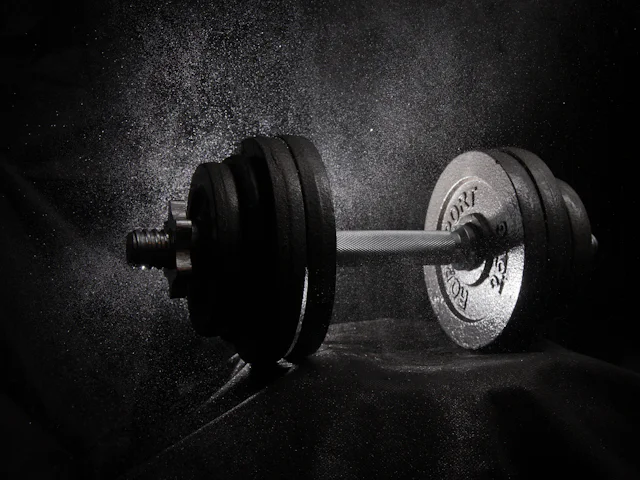
Adjustable Dumbbells
OptionalThe home alternative to a barbell: dumbbell RDLs train the same hinge without a rack or plates.
Squat Racks
OptionalOptional but convenient: unracking the bar at hip height saves a deadlift from the floor before each set.
Common mistakes
- 1
Bending the knees into a squat
If the knees bend more as you go down, the quadriceps take over. Fix the knees at a slight bend and move the hips back.
- 2
Rounding the back to touch the floor
Range ends where the hamstrings run out of length. Stop at a strong stretch with a neutral spine — usually around mid-shin.
- 3
Letting the bar drift forward
A bar away from the legs increases the load on the lower back. Keep it close enough to brush the thighs.
- 4
Rushing the lowering phase
The stretched position is the point of the exercise. Lower under control and feel the hamstrings lengthen.
Practical takeaway
- 1Hinge from the hips with soft, fixed knees and a neutral back.
- 2Lower to a strong hamstring stretch, usually around mid-shin.
- 3Use 2–4 sets of 6–12 reps, one to three reps short of failure.
- 4Pair it with a leg-curl or Nordic exercise for complete hamstring development.
- 5Dumbbells work almost as well as a barbell at home.
Conclusion
The Romanian deadlift is one of the most efficient ways to train the hamstrings and glutes through a long range of motion, and it needs nothing more than a barbell or a pair of dumbbells.
Learn the hinge with light weight, keep the range honest and progress steadily. It will carry over to the deadlift, sprinting and almost every lower-body goal.
References
- [1]Morin T, Doguet V, Nordez A, Caillet A, Lacourpaille L. Minimal Role of Hamstring Hypertrophy in Strength Transfer Between Nordic Hamstring and Stiff-Leg Deadlift: A Blinded Randomized Controlled Trial. Journal of Strength and Conditioning Research. 2025;39(9):924–932. Randomized controlled trial doi.org/10.1519/JSC.0000000000005159
- [2]Lee S, Schultz J, Timgren J, Staelgraeve K, Miller M, Liu Y. An electromyographic and kinetic comparison of conventional and Romanian deadlifts. Journal of Exercise Science & Fitness. 2018;16(3):87–93. EMG and kinetics study doi.org/10.1016/j.jesf.2018.08.001
- [3]Maeo S, Huang M, Wu Y, et al. Greater Hamstrings Muscle Hypertrophy but Similar Damage Protection after Training at Long versus Short Muscle Lengths. Medicine & Science in Sports & Exercise. 2021;53(4):825–837. Within-subject training study doi.org/10.1249/MSS.0000000000002523
- [4]Lopez P, Radaelli R, Taaffe DR, et al. Resistance Training Load Effects on Muscle Hypertrophy and Strength Gain: Systematic Review and Network Meta-analysis. Medicine & Science in Sports & Exercise. 2021;53(6):1206–1216. Systematic review and network meta-analysis doi.org/10.1249/MSS.0000000000002585
- [5]Pelland JC, Remmert JF, Robinson ZP, Hinson SR, Zourdos MC. The Resistance Training Dose Response: Meta-Regressions Exploring the Effects of Weekly Volume and Frequency on Muscle Hypertrophy and Strength Gains. Sports Medicine. 2026;56(2):481–505. Systematic review with meta-regressions (67 studies) doi.org/10.1007/s40279-025-02344-w
- [6]Aasa B, Berglund L, Michaelson P, Aasa U. Individualized Low-Load Motor Control Exercises and Education Versus a High-Load Lifting Exercise and Education to Improve Activity, Pain Intensity, and Physical Performance in Patients With Low Back Pain: A Randomized Controlled Trial. Journal of Orthopaedic & Sports Physical Therapy. 2015;45(2):77–85. Randomized controlled trial doi.org/10.2519/jospt.2015.5021
- [7]Plotkin D, Coleman M, Van Every D, et al. Progressive overload without progressing load? The effects of load or repetition progression on muscular adaptations. PeerJ. 2022;10:e14142. Randomized controlled trial doi.org/10.7717/peerj.14142
This guide summarises published research for healthy adults. It is general information, not medical advice — if you have a health condition, injury or take medication, talk to a qualified professional before changing your training, diet or supplements.