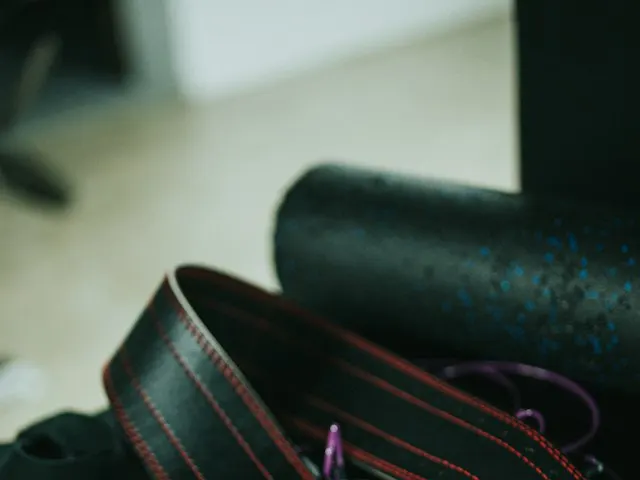
Best Overall
Dark Iron Fitness Leather
The most proven general-purpose leather belt — supportive, comfortable and easy to size
Leather, prong buckle
8.0 / 10 LiftEvidence score
A lifting belt gives your trunk something to brace against on heavy squats and deadlifts. Research shows it raises intra-abdominal pressure and can add reps and load to heavy sets — but it is a tool for heavy work, not a substitute for learning to brace.
We compared belts sold on Amazon.com across leather prong, lever and nylon designs. Specifications and federation claims come from the listings, owner themes from recurring reviews, and the LiftEvidence score is our weighted editorial assessment.
By the LiftEvidence editorial team · Updated October 2026 · 7 products compared · Affiliate disclosure
For most lifters buying a first belt, the Dark Iron Fitness leather belt is the safest choice: a 4 in leather prong belt with an enormous owner record, comfortable enough for squats, deadlifts and overhead work. If you powerlift seriously, a 10 mm belt such as the Iron Bull prong belt — or the Gymreapers lever belt for faster on-and-off — gives maximal rigidity.
For Olympic lifting, functional fitness or frequent belting between sets, the Element 26 self-locking nylon belt locks under load and releases in a second. The Schiek 2004 is the comfortable contoured option for general training.
Lifters who train heavy squats, deadlifts and overhead presses and want to brace harder at high loads. A belt is a performance tool for heavy sets, not something you need for every exercise.
If you are still learning the lifts or train mostly with light to moderate loads, you do not need a belt yet: learn to brace without one first.
Comfortable, adjustable belts that work across squats, deadlifts, presses and rows. The Dark Iron is leather with a prong buckle; the Schiek is contoured nylon with a front-cinching buckle.
Dark Iron Fitness Leather · Schiek 2004
Compare side by side10 mm, 4 in belts for maximal rigidity. The Iron Bull is the most proven; the Gymreapers lever is fastest on and off but has few reviews; the Titan Longhorn is US-made with a lifetime warranty.
Iron Bull 10 mm Prong · Gymreapers 10 mm Lever · Titan Longhorn
Compare side by sideFlexible nylon belts that do not dig in during cleans and snatches and come off quickly between sets; the Element 26 is far more secure than the hook-and-loop Harbinger.
Element 26 Self-Locking · Harbinger 4 in Nylon
Compare side by sideEditorial picks for specific needs, based on the specifications and trade-offs recorded below. A label is given only where a product clearly earns it.
Best Overall
The most proven general-purpose leather belt — supportive, comfortable and easy to size
Leather, prong buckle
8.0 / 10 LiftEvidence score
Best for Powerlifting
A 10 mm prong belt with a large owner record — the classic powerlifting format
Leather, prong buckle · 10 mm
7.9 / 10 LiftEvidence score
Best Lever Belt
10 mm rigidity with a one-second lever release — on a small owner record
Leather, lever buckle · 10 mm
8.0 / 10 LiftEvidence score
Best Premium Belt
American-made 10 mm belt with a lifetime warranty — premium, on a small owner record
Leather, prong buckle · 10 mm
7.6 / 10 LiftEvidence score
Best Nylon Belt
Locks under load, releases in a second — the most versatile nylon belt
Nylon, self-locking buckle
8.1 / 10 LiftEvidence score
Best Contoured Belt
Contoured nylon with a front-cinching buckle — comfortable support for everyday training
Nylon, contoured
7.9 / 10 LiftEvidence score
Showing 7 of 7. Add up to 4 to a comparison.
Best Overall
The most proven general-purpose leather belt — supportive, comfortable and easy to size
8.0
Best for Powerlifting
A 10 mm prong belt with a large owner record — the classic powerlifting format
7.9
Best Lever Belt
10 mm rigidity with a one-second lever release — on a small owner record
8.0
Best Premium Belt
American-made 10 mm belt with a lifetime warranty — premium, on a small owner record
7.6
Best Nylon Belt
Locks under load, releases in a second — the most versatile nylon belt
8.1
Best Contoured Belt
Contoured nylon with a front-cinching buckle — comfortable support for everyday training
7.9
A light, flexible first belt — easy on, comfortable, least rigid
6.9
The same criteria for every product. A dash means the information was not published or could not be confirmed. Scores are editorial assessments, not measurements.
| 7 products | Check price on Amazon → | Check price on Amazon → | Check price on Amazon → | Check price on Amazon → | Check price on Amazon → | Check price on Amazon → | Check price on Amazon → |
|---|---|---|---|---|---|---|---|
| Editorial summary (LiftEvidence) | |||||||
| LiftEvidence score | 8.0 / 10 | 7.9 / 10 | 8.0 / 10 | 7.6 / 10 | 8.1 / 10 (highest) | 7.9 / 10 | 6.9 / 10 |
| Recommendation | Best Overall | Best for Powerlifting | Best Lever Belt | Best Premium Belt | Best Nylon Belt | Best Contoured Belt | — |
| Best suited to | General Strength, First Belt, Olympic Lifting | Powerlifting, General Strength | Powerlifting, General Strength | Powerlifting | Olympic Lifting, Functional Fitness, General Strength, First Belt | General Strength, Functional Fitness | First Belt, Functional Fitness |
| Rigidity for heavy lifts | Good | Excellent | Excellent | Excellent | Good | Good | Limited |
| Specifications (manufacturer) | |||||||
| Type | Leather, prong buckle | Leather, prong buckle | Leather, lever buckle | Leather, prong buckle | Nylon, self-locking buckle | Nylon, contoured | Nylon, hook-and-loop |
| Material | Genuine leather, double-row stitching | Leather | Bovine leather, suede exterior | Leather, made in the USA | Nylon, double-reinforced stitching | Nylon | Heavy-duty nylon web with 346-count stitching |
| Thickness | — | 10 mm | 10 mm | 10 mm | — | — | — |
| Width | 4 in | 4 in | 4 in | 4 in | 4 in (uniform) | 4 3/4 in (contoured) | 4 in, with 3 in support strap |
| Closure | Double-prong buckle, 12 holes at 1 in intervals | Prong buckle | Steel lever buckle | Single prong, seamless roller buckle | Full-metal self-locking buckle with quick-release roller | One-way friction buckle | Hook-and-loop strap with steel roller buckle |
| Sizes | XS–XL (about 22–49 in waist) | Multiple sizes (see listing) | Multiple sizes (e.g. Large 34–41 in) | Multiple sizes (e.g. Small 25–35 in) | Infinitely adjustable within each size | Multiple sizes (see listing) | S–XL (24–42 in waist) |
| Federation approval (claimed) | — | IPF approval claimed by the seller | IPF, IPL, USPA and USAPL standards claimed by the manufacturer | IPF approval stated on the listing | Meets requirements of sanctioned Olympic lifting and functional-fitness events (manufacturer claim) | — | — |
| Warranty | — | See listing | — | Lifetime warranty (listing) | — | — | — |
| Warranty | — | — | — | Lifetime warranty stated on the Amazon listing. | — | — | — |
| Price & customer ratings (Amazon) | |||||||
| Price band | — | — | — | — | — | — | — |
| Amazon customer rating | See current rating on Amazon | See current rating on Amazon | See current rating on Amazon | See current rating on Amazon | See current rating on Amazon | See current rating on Amazon | See current rating on Amazon |
| Editorial assessment (LiftEvidence) | |||||||
| Less suitable for | Competitive powerlifters who want a 10 mm, federation-approved belt for maximal attempts. | Olympic lifting, high-rep circuits or anyone who wants to take the belt on and off quickly between sets. | Anyone who wants a long owner track record before buying, or whose waist size changes often (resizing means moving the lever). | Lifters who want a large owner record before buying, or a belt for Olympic lifting. | Powerlifters who want maximal rigidity for near-maximal squats and deadlifts. | Competition powerlifting (contoured width) or lifters who want the stiffness of 10 mm leather. | Heavy, near-maximal squats and deadlifts, where a rigid leather or 10 mm belt braces better. |
| Strengths |
|
|
|
|
|
|
|
| Drawbacks |
|
|
|
|
|
|
|
| Support & rigidity score | 7.5 / 10 | 9.5 / 10 (highest) | 9.5 / 10 (highest) | 9.5 / 10 (highest) | 7.0 / 10 | 7.0 / 10 | 5.5 / 10 |
| Build & durability score | 8.0 / 10 | 8.0 / 10 | 8.0 / 10 | 8.5 / 10 (highest) | 8.0 / 10 | 8.0 / 10 | 6.5 / 10 |
| Comfort & fit score | 9.0 / 10 (highest) | 7.0 / 10 | 7.5 / 10 | 7.0 / 10 | 8.5 / 10 | 9.0 / 10 (highest) | 8.5 / 10 |
| Closure score | 7.5 / 10 | 6.0 / 10 | 9.0 / 10 | 7.0 / 10 | 9.5 / 10 (highest) | 8.5 / 10 | 7.0 / 10 |
| Specification transparency score | 6.0 / 10 | 6.5 / 10 | 7.5 / 10 (highest) | 6.0 / 10 | 6.5 / 10 | 6.0 / 10 | 7.0 / 10 |
| Owner feedback score | 9.5 / 10 (highest) | 8.5 / 10 | 5.5 / 10 | 5.5 / 10 | 9.0 / 10 | 8.5 / 10 | 8.0 / 10 |
What matters most
Leather for rigidity, nylon for versatility
10 mm leather braces best for heavy powerlifts; nylon suits Olympic lifting and frequent on-and-off.
Closure speed matters
Lever and self-locking buckles release in a second; thick prong belts are slow to tighten.
Size where you wear it
Measure around the navel, not your trouser size.
Check competition rules
Federations set belt dimensions; contoured belts are often not allowed.
A belt gives your abdominal wall something to push against as you take a big breath and brace. Classic studies of the back squat found higher intra-abdominal pressure with a belt — about 25–40% higher across repeated sets in one study — which helps stiffen the trunk under load.
Recent trials show performance effects. In a 2026 study, men and women — with and without belt experience — completed more repetitions with their beltless 6RM load when wearing a belt (about 8 versus 6.5) and moved the bar faster; they felt more stable, but objective postural sway did not improve. Another 2026 study found squat one-rep max was higher with a belt (about 119 vs 114 kg on average).
On spinal loading, a study of experienced weightlifters found a stiff belt reduced spine compression by about 10% — but only when lifters inhaled before lifting. How you breathe and brace matters as much as the belt.
Related: Dark Iron Fitness Leather · Iron Bull 10 mm Prong
Most belt studies are short, single-session experiments in small groups. They show what happens during a heavy set, not whether training with a belt for months builds more strength or muscle, or whether it prevents injuries in healthy lifters.
The practical reading: a belt is a reasonable tool for heavy, low-rep sets of squats and deadlifts, and for some lifters on presses. It is not a substitute for learning to brace, and it is not a medical device.
Leather belts, especially 10 mm thick ones, are the most rigid and give the firmest surface to brace against — the choice for heavy squats and deadlifts. They need breaking in and are slower to adjust.
Nylon belts are more flexible, comfortable in dynamic lifts and quicker to adjust. They suit Olympic lifting, functional fitness and lifters who belt up and down often, at the cost of some rigidity at maximal loads.
Related: Element 26 Self-Locking · Iron Bull 10 mm Prong
Prong buckles allow fine adjustment between holes and suit changing waist sizes, but thick prong belts are hard to tighten. Lever buckles clamp on and release instantly once set — at the cost of using a screwdriver to resize. Self-locking and friction buckles on nylon belts adjust infinitely and release quickly.
If you belt up for every working set, closure speed matters more than you might expect.
Related: Gymreapers 10 mm Lever · Schiek 2004
Powerlifting federations set maximum belt dimensions and generally require a uniform width, so contoured belts such as the Schiek 2004 are not allowed in many of them. Rules vary and change, so check your federation's current technical rules and approved lists before competing — approval on a listing is the seller's claim.
Measure your waist where you will wear the belt — usually around the navel, not your trouser size — and choose a size that leaves room to tighten and loosen.
Belts help most on heavy squats, deadlifts and some presses. On light sets and most accessory work they add little.
The belt only helps if you breathe in and brace against it; one study found the reduction in spine compression only when lifters inhaled before the lift.
Very thick belts are hard to break in and can dig in. For most lifters 10 mm is the practical maximum.
Belts sit higher than trousers. Measure where you will wear it.
We searched Amazon.com for weightlifting belts, sorted by review volume, excluded dip belts, accessories and belts with recurring breakage reports, and chose differentiated finalists across leather prong, lever and nylon designs. Each was scored on the same criteria: support and rigidity (25%), build and durability (20%), comfort and fit (15%), closure (15%), specification transparency (10%) and owner feedback weighted by review volume (15%).
We could not verify current US prices, so we do not score value or assign price bands; check the current price on Amazon. Specifications and federation claims come from the listings and are reported as claims. Owner themes come from recurring reviews and Amazon's review summaries, reported as user experience. Scores are LiftEvidence editorial assessments. We have not physically tested these belts.
There is no good evidence of that. One study found no difference in trunk or leg muscle activity with and without a belt at 90% of 1RM. Use the belt for heavy sets and train without it on lighter ones.
Source: [5]
That has not been shown in healthy lifters. A belt can reduce spinal compression a little when you inhale and brace, but studies are short-term and small. Technique, sensible loading and recovery matter more.
Source: [4]
Leather for heavy squats and deadlifts and maximal rigidity; nylon for Olympic lifting, functional fitness or if you belt up and down often. A general-purpose 4 in leather belt is a good first belt for most strength trainees.
Lever belts are faster to tighten and release once set to your size but need a tool to resize. Prong belts adjust easily as your waist changes but are slower, especially when thick.
Yes, many lifters do for heavy cleans and jerks. Thick leather belts can dig in during the catch; a flexible uniform-width belt such as a nylon self-locking belt is usually more comfortable.
Check your federation's current technical rules and approved-equipment lists. Listings often claim approval; treat that as the seller's statement until you have checked.
Product specifications come from manufacturers and their Amazon.com listings (each product page lists its sources); customer themes come from Amazon reviews and are reported as user experience, not as evidence. Amazon customer ratings change over time, so we link to the live figure on Amazon rather than reproducing it. Review themes were last checked on October 2026. LiftEvidence scores are editorial assessments; we have not tested these products ourselves. First published October 2026.
Home gym setups that use this:Garage gymStrength-focused gym