How Close to Failure Should You Train?
Is training to failure necessary for muscle growth? What meta-analyses show about proximity to failure, and how to use reps in reserve.
The short answer
You do not need to train to failure to build muscle. Stopping a few reps short (about 0–3 reps in reserve) produces similar growth, and failure training has not shown a consistent advantage.
What the evidence says
A 2023 systematic review with meta-analysis found no evidence that training to momentary muscular failure was superior to non-failure training for muscle growth. The authors suggested the relationship between proximity to failure and growth may be non-linear — sets need to be hard, but the last rep or two adds little.
The 2026 ACSM position stand likewise found that training to momentary muscle fatigue did not consistently change outcomes.
Use reps in reserve (RIR)
Reps in reserve is how many more reps you could have done with good form. A set ending at 2 RIR means you had two reps left. The RIR-based RPE scale was developed to make this practical in training.
Most people underestimate how many reps they have left at first; it gets more accurate with practice, especially on sets close to the limit.
Evidence: [3]
What to do
- Take most working sets to about 1–3 reps in reserve.
- Use failure, if at all, on the last set of safer exercises (machines, cables, curls) — not on heavy squats or deadlifts without safeties.
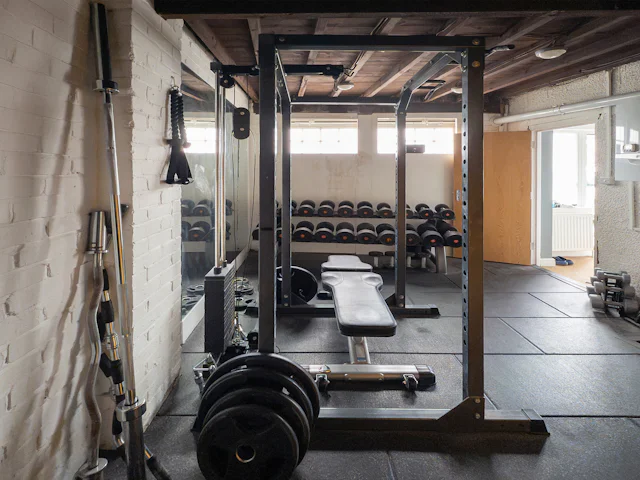
- At home, set safety arms or use a rack whenever you push compound lifts hard.
Common mistakes
- Grinding every set to failure and then being unable to recover for the next session.
- Stopping so far from failure (5+ reps left) that sets are not really hard.
Bottom line
Train hard, not to failure every time: about 1–3 reps in reserve is enough for growth and easier to recover from.
References
- [1] Refalo MC, Helms ER, Trexler ET, Hamilton DL, Fyfe JJ. Influence of resistance training proximity-to-failure on skeletal muscle hypertrophy: a systematic review with meta-analysis. Sports Medicine. 2023;53(3):649–665. Systematic review and meta-analysis doi.org/10.1007/s40279-022-01784-y
- [2] Currier BS, D’Souza AC, Fiatarone Singh MA, et al. American College of Sports Medicine Position Stand. Resistance Training Prescription for Muscle Function, Hypertrophy, and Physical Performance in Healthy Adults: An Overview of Reviews. Medicine & Science in Sports & Exercise. 2026;58(4):851–872. Position stand (overview of 137 systematic reviews) doi.org/10.1249/MSS.0000000000003897
- [3] Helms ER, Cronin J, Storey A, Zourdos MC. Application of the repetitions in reserve-based rating of perceived exertion scale for resistance training. Strength and Conditioning Journal. 2016;38(4):42–49. Narrative review / practical application doi.org/10.1519/SSC.0000000000000218
This guide summarises published research for healthy adults. It is general information, not medical advice — if you have a health condition, injury or take medication, talk to a qualified professional before changing your training or supplements.